Taipei Attractions | Blue Dye Workshop (Qing Chu Yu Lan) | Sanxia Indigo Dye Visitor Center | Hands-On Indigo Dyeing DIY

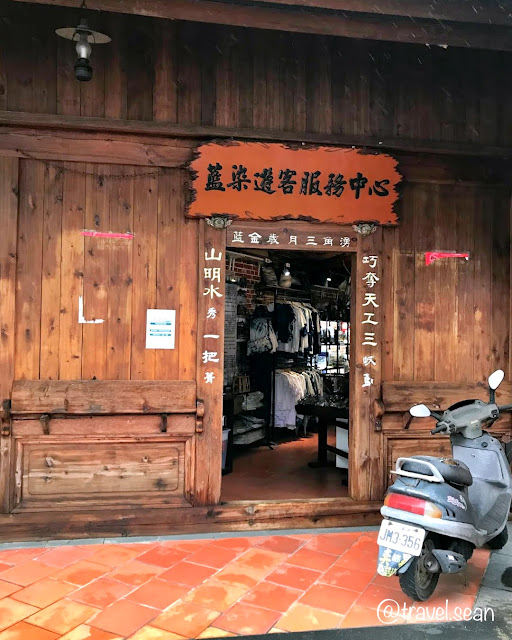
When you visit Sanxia, besides strolling along Sanxia Old Street and visiting Zushi Temple, did you know that right here by Sanxia Old Street there's also an indigo dyeing workshop where you can make your own DIY creations? At the Indigo Dye Visitor Center you can not only buy all sorts of handmade indigo-dyed products, but also make your own one-of-a-kind indigo item!
- Address: No. 47, Ren'ai St., Sanxia District, New Taipei City
- Opening hours: 10:00 - 18:00
- DIY fee: depends on the item
- Parking: none on site; you can park at the nearby Sanxia Elementary School underground parking lot
- Official fan page: https://www.facebook.com/YangChun.2015/
🚃 Transport / Parking Info
 |
| The Indigo Dye Park on Sanxia Old Street |
The Indigo Dye Visitor Center and the Qing Chu Yu Lan (Blue Dye) Workshop are located on Ren'ai Street, another street running behind the latter half of Sanxia Old Street, right next to a tiny indigo-themed park. Plenty of public transport options can get you to Sanxia Old Street.
Public Transport
- From Banqiao Station, take Taipei Bus 702 or 705 to Sanxia Old Street stop
- From Xinpu Station, take Capital Bus 802 to Sanxia Old Street stop
- From Yongning Station, take Taipei Bus 706 or 812 to Sanxia Old Street stop
Driving
Since there's no parking nearby, consider parking at the Sanxia Elementary School underground parking lot not far away — about a 5-minute walk.
👕 What Is Indigo Dyeing?

Indigo dyeing is a form of natural dyeing, with records dating back over 3,000 years to the pre-Qin period. It's a printing and dyeing craft that uses natural plant or mineral dyes to color fabric blue. Here in Sanxia, there were more than 21 indigo dye houses during the Japanese colonial era; the traditional dyeing industry only began to decline later, with the mass production of chemical dyes and industrial dyeing and finishing plants.
The raw material for indigo dyeing is the indigo plant (a general term for several plants used as indigo dye sources). Through oxidation, the dye liquid — originally dark green — turns an indigo blue once it comes into contact with air.
 |
| Assam indigo (strobilanthes) |
🔧 The DIY Experience

Above is the price list for DIY activities at the Qing Chu Yu Lan workshop — prices vary by the item you make. Individual walk-in visitors don't need a reservation; just come in during business hours (10:00 - 18:00) and say you'd like to do a DIY session. That said, both the making and the drying take time, so it's best not to arrive too late.
 |
| Making a handmade book |
This time we chose to make a few handmade books and a door curtain. After choosing and paying, a staff member takes you to the seating area for a brief explanation and lets you pick the indigo pattern you'd like to make.
 |
| All kinds of patterns hang from the ceiling for you to choose from |
Next comes the prep work before dyeing! Before trying indigo dyeing, I had no idea that all these patterns are created by tying. Different ways of binding the fabric produce all sorts of beautiful patterns — I have genuine admiration for this traditional craft.
 |
| Different patterns require different binding techniques |
Then it's time to actually get into the dye vat. To dye our fabric blue, you have to dip it in the dye repeatedly and knead it constantly so the dye penetrates deep into the cloth, while also turning the fabric over frequently so the dye reacts with the air and oxidizes — that's how it goes from dark green to the final indigo blue.
 |
| The workshop has two dye vats available |
 |
| Gloves and work aprons are provided on site |
 |
| Yellow-green is the dye liquid's original color |
Different items require different soaking times and numbers of dips. Generally you need at least three rounds of about 3 minutes of soaking and kneading each. After wringing it out, the piece needs to air-dry for a while before visitors can take it home.

 |
| Hung up to air-dry on site |
Air-drying on site actually takes quite a while, and it depends on the weather too. It was raining that day, so after we finished we went off to wander around Sanxia Old Street and even had lunch — and it still wasn't dry when we came back 😅. But they bagged it up for us to take home and keep drying there!
Think you're done once it dries at home?
Nope — there are still a few follow-up steps!
After leaving it for three days at home, you also need to soak it in white vinegar, and if you made a handmade book, you'll need to assemble the cover yourself.

🏞 The Finished Products
 |
| Door curtain |
 |
| Gradient handmade book |
On previous visits to Sanxia Old Street, the indigo workshop was just too inconspicuous — it isn't on the main street of the old town either. If I hadn't found someone's post about it online, hardly anyone would notice there's a place here where you can do hands-on DIY.
Although I personally felt the prices were a touch on the high side, the experience was really fun. If you're interested, next time you're at Sanxia Old Street, besides strolling the old street itself, and if you want something a little different and have never tried handmade indigo dyeing, consider dropping by the Sanxia Indigo Dye Visitor Center.
More Taiwan Accommodation and Attraction References
If you like what I share, feel free to follow the travel accounts below — I regularly post beautiful spots I've found and practical travel tips. Recommendations for fun places are always welcome!

留言
張貼留言