Kansai Travel | Kyoto Bars | House of KI NO BI | KI NO BI Kyoto Showroom | Gin Tasting | Exclusive House Gin

KI NO BI comes from Japan's first gin distillery, and it has always been a standout, mid-to-high-priced gin brand. Since I was in Kyoto this time, I of course had to visit KI NO BI's Kyoto showroom, House of KI NO BI.
📜 Information
- Address: 358 Kawaramachi Doori Nijo Agaru Shimizu-cho, Nakagyo Ward, Kyoto, 604-0911, Japan
- Opening hours:
- 15:00–21:00 (Wed, Thu, Sun)
- 15:00–22:00 (Fri, Sat)
- Price: Free admission
- Official website: https://kyotodistillery.jp/en/house_kinobi/
📍 Location & Transportation
 |
| https://kyotodistillery.jp/en/house_kinobi/ |
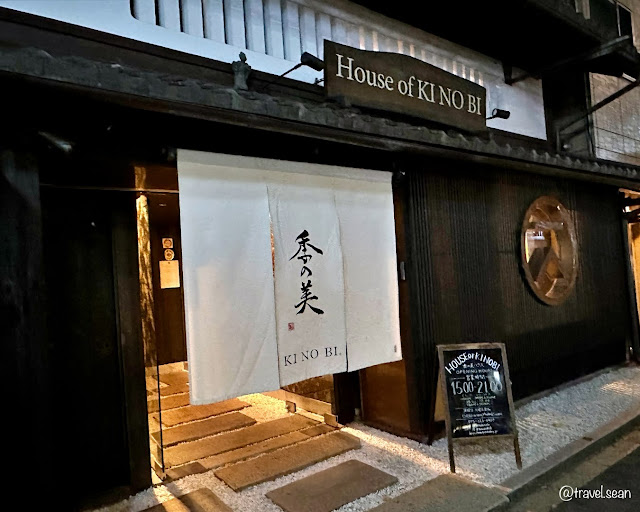
House of KI NO BI is located near Kyoto Shiyakusho-mae Station, just one subway stop from the bustling Kyoto-Kawaramachi Station. Whether you take the subway or simply hop on a bus, it's never far away.
This time I happened to be having dinner near Kyoto-Kawaramachi Station, so I just took a bus over. House of KI NO BI isn't hard to find either — it sits right along a prominent main road, so you'll spot it easily as you pass by.
🏢 Inside the Venue
 |
| The understated Japanese-style entrance |
The House of KI NO BI building has two floors. Once you exclude the members-only Gin Palace and the reservation-only tasting room Konwa no ma, the remaining space isn't very large.
One part of the second floor is Konwa no ma, a tasting room where you can sample the six elements that make up KI NO BI. It sounds like a great experience, but it requires a reservation in advance and is only presented in Japanese — you probably wouldn't understand the explanations, so I skipped it this time.
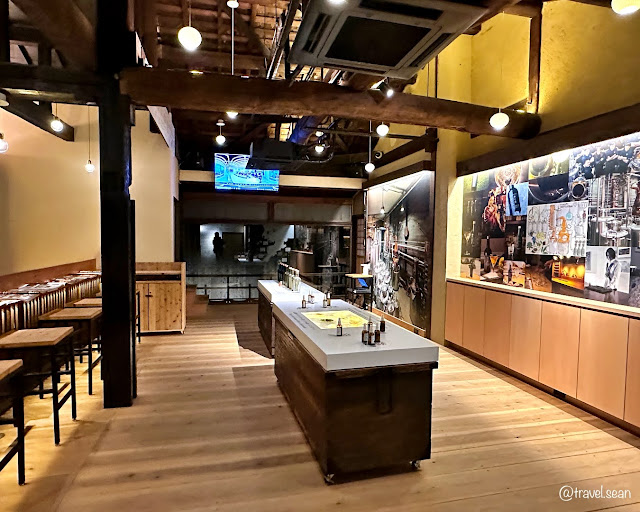 |
| The exhibition area on the second floor |
The other half of the floor is the exhibition area, with displays on the distillation process, the origins of the botanicals, the evolution of the bottle design, and the aromas of the different elements. If you regularly drink KI NO BI, or are curious about how it's made and where its flavors come from, this exhibition space will give you a much better understanding.
 |
| Introduction to the distillation process |
 |
| Origins of the botanicals |
 |
| The evolution of the bottle design |
 |
| Aroma displays of the different elements |
KI NO BI uses 11 Japanese botanicals and spices — juniper, orris root, hinoki cypress, yuzu, lemon, gyokuro green tea, sansho pepper, kinome (sansho leaf), red shiso, ginger and bamboo — grouped into six elements:
- Base: juniper, orris root, hinoki cypress
- Citrus: yuzu, lemon
- Herbal: sansho pepper, kinome (sansho leaf)
- Spice: ginger
- Green Tea: gyokuro green tea
- Fruity & Floral: red shiso, bamboo
Each is distilled separately, then blended with water from a sake brewery in Fushimi, creating the perfectly balanced, fresh and smooth KI NO BI.
 |
| The seating area on the first floor |
Apart from the members-only Gin Palace, the ground floor has just a bar counter, a seating area and a product display area. At the bar you can taste the various KI NO BI expressions, or order cocktails made with KI NO BI.
 |
| The bar counter, seating about six |
🍸 KI NO BI Tasting

The ground-floor bar at House of KI NO BI currently offers 13 different KI NO BI expressions to taste and five gin cocktails to choose from. There are also soft drinks such as tonic water and ginger ale available on their own, plus a small selection of bar snacks.
 |
| The House of KI NO BI menu |
I went with the KI NO BI Tasting Flight Set "KI-KI-KI NO BI," which lets you pick three 15 ml pours. I chose KI NO BI House Gin, KI NO TOU and KI NO BI Edition K.

The tasting flight is served in order of flavor intensity; they recommend starting with the mildest. I'd also suggest ordering a bottle of tonic water so you can pair it with each of the different expressions.

Recommended way to taste
For the first round, drink all three neat to get their most original flavors. Then add a single ice cube and taste again as the ice melts and cools them down. For the third round, pour in tonic water and enjoy how the three different gins change as Gin and Tonics.
- Round 1: neat
- Round 2: with one ice cube
- Round 3: with more ice and tonic water
 |
| Gin & Tonic |
KI NO BI House Gin

Extremely fresh, with pronounced yuzu and citrus aromas. This one is sold exclusively at House of KI NO BI: it's based on the original KI NO BI but cut to 43% with well water from the back garden of "KI NO BI House," making it fresher and smoother than the original. It works beautifully neat, over ice, or with tonic water.
KI NO BI Edition K

I originally wanted to try Edition G, aged in champagne casks, but it was out of stock, so I went with Edition K, finished in peated whisky casks instead.
Edition K is aged in Kilchoman peated whisky casks, giving it a gentle peat aroma that blends surprisingly well with KI NO BI's original yuzu and citrus notes — especially as a G&T with tonic water, which was outstanding. I'm not usually a fan of peated whisky, but the subtle smokiness here is just right, and paired with KI NO BI's original character it makes for a really well-crafted gin.
KI NO TOU

KI NO TOU, or Kyoto Old Tom Gin, is blended with kokuto brown sugar from Okinawa, and was served last. Both its aroma and palate carry a very distinct brown sugar character, sweet and rounded. That said, beyond the brown sugar note, I didn't find it as impressive as the previous two.
KI NO BAI

I was also curious about KI NO BAI, the plum liqueur from KI NO BI, so I ordered one as a Gin & Soda.
 |
| A bartender mixes it for you |
For KI NO BAI, local Kyoto plums are steeped in KI NO BI, followed by haskap berries from Hokkaido, and finally sugar from Japan's northernmost island is added — resulting in a bottle with a distinctly reddish color.
The taste isn't quite what you'd expect from a typical umeshu; it feels more like a liqueur. Personally, I still prefer classic plum wine.
Overall, if you enjoy gin and haven't tried many of the KI NO BI expressions yet, House of KI NO BI is well worth a visit — you can sample whichever versions you're curious about right there.
That said, the KI NO BI sold in the shop isn't cheaper than at outside liquor stores, and tax refunds don't apply. So apart from the KI NO BI House Gin, if you want to buy the more common expressions, heading to a nearby liquor store will be much cheaper.
 |
| KI NO TEA bought at a liquor store, and the exclusive House Gin bought in-store |
More bar records from around the world:
Bar List | Bar surfing around the world | A record of bars around the globe

If you enjoy my posts, feel free to follow the travel accounts below — I regularly share beautiful spots and useful travel tips, and I'm always happy to hear your recommendations for fun places!
Instagram: @travel.sean

留言
張貼留言